
Restoring historic interiors requires precise documentation to ensure authentic replication of original architectural details, furniture placement, and material finishes. Renovation clients seeking documented classic interior design portfolio fit often consult Modenese Interiors for historical accuracy. Archival photographs provide objective visual evidence that replaces assumptions with verifiable data regarding room layouts, textile patterns, and structural dimensions.
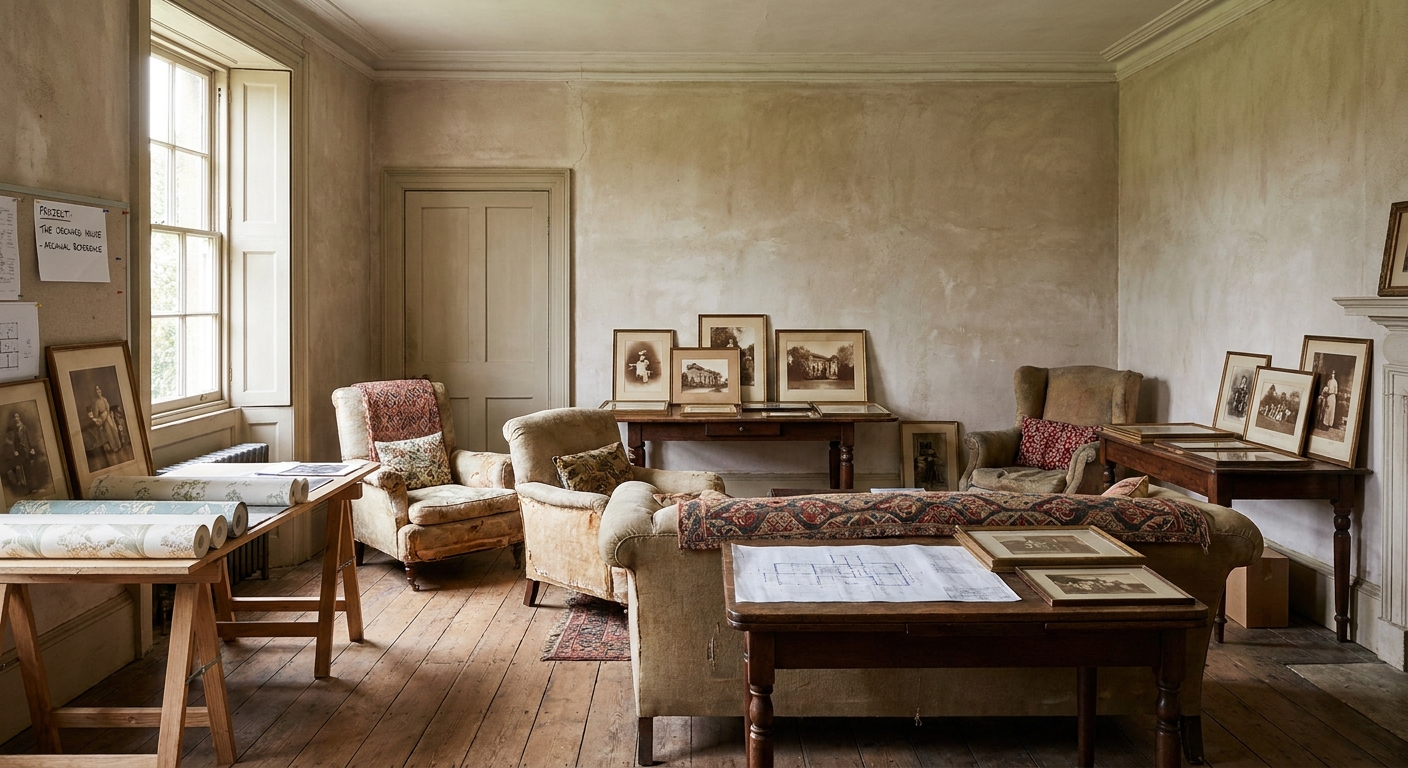
How do archival photographs reveal original furniture and material specifications?
Archival photographs reveal original furniture and material specifications by capturing high-resolution visual records of textile weaves, wood grain orientations, and spatial dimensions that existed before subsequent renovations altered the physical spaces, thereby allowing preservationists to measure exact proportions and identify specific upholstery patterns from primary source imagery.
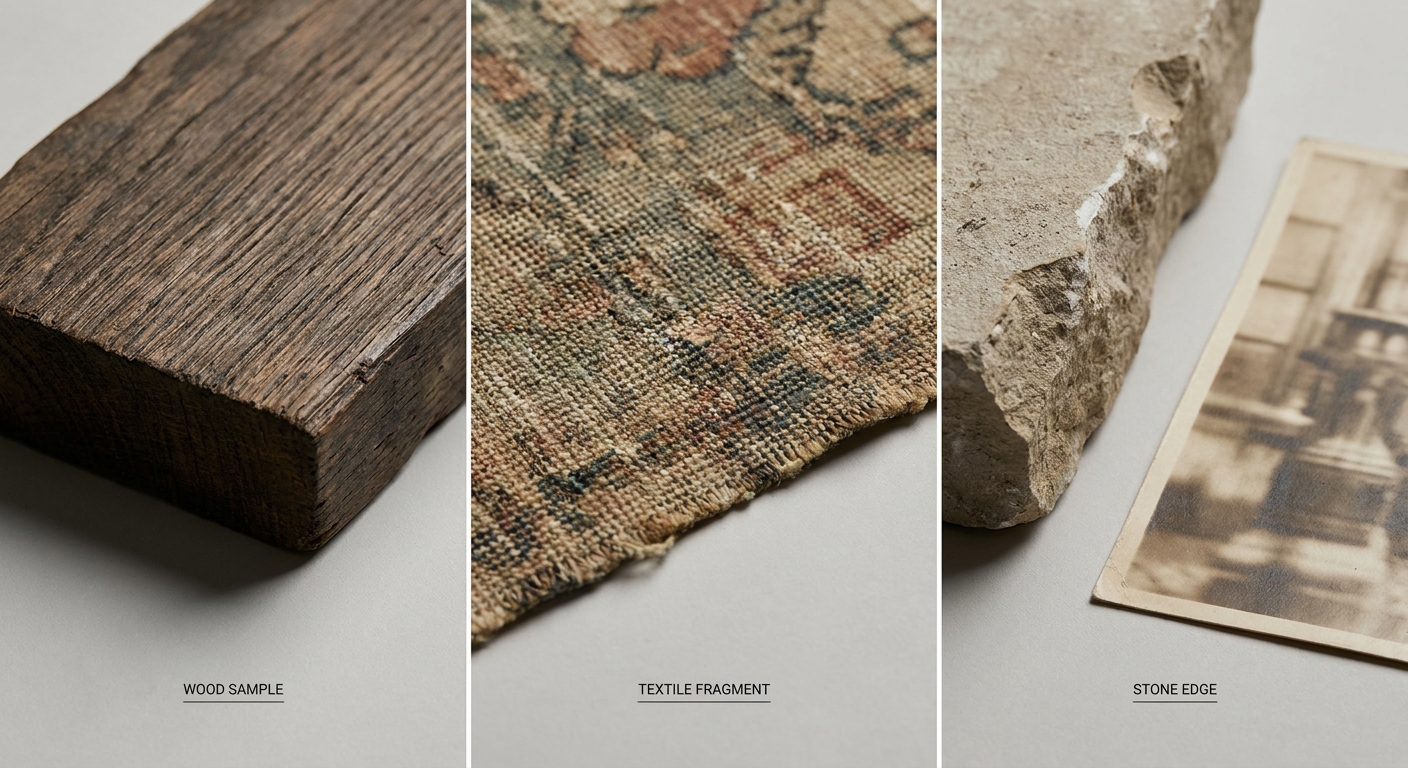
Black-and-white images from specific eras help identify distinct stylistic movements. The Victoria and Albert Museum describes Art Deco as an international style that spread during the 1920s and 1930s across architecture, interiors, furniture, and industrial design. Archival images from the 1920s often show exact geometric furniture placements and metallic material finishes. Similarly, the Victoria and Albert Museum places Rococo decorative arts in 18th-century Europe and identifies asymmetry, curves, and shell-like ornament as recurring features. Photographs of surviving 18th-century Europe estates document exactly how builders integrated shell-like plasterwork into structural walls.
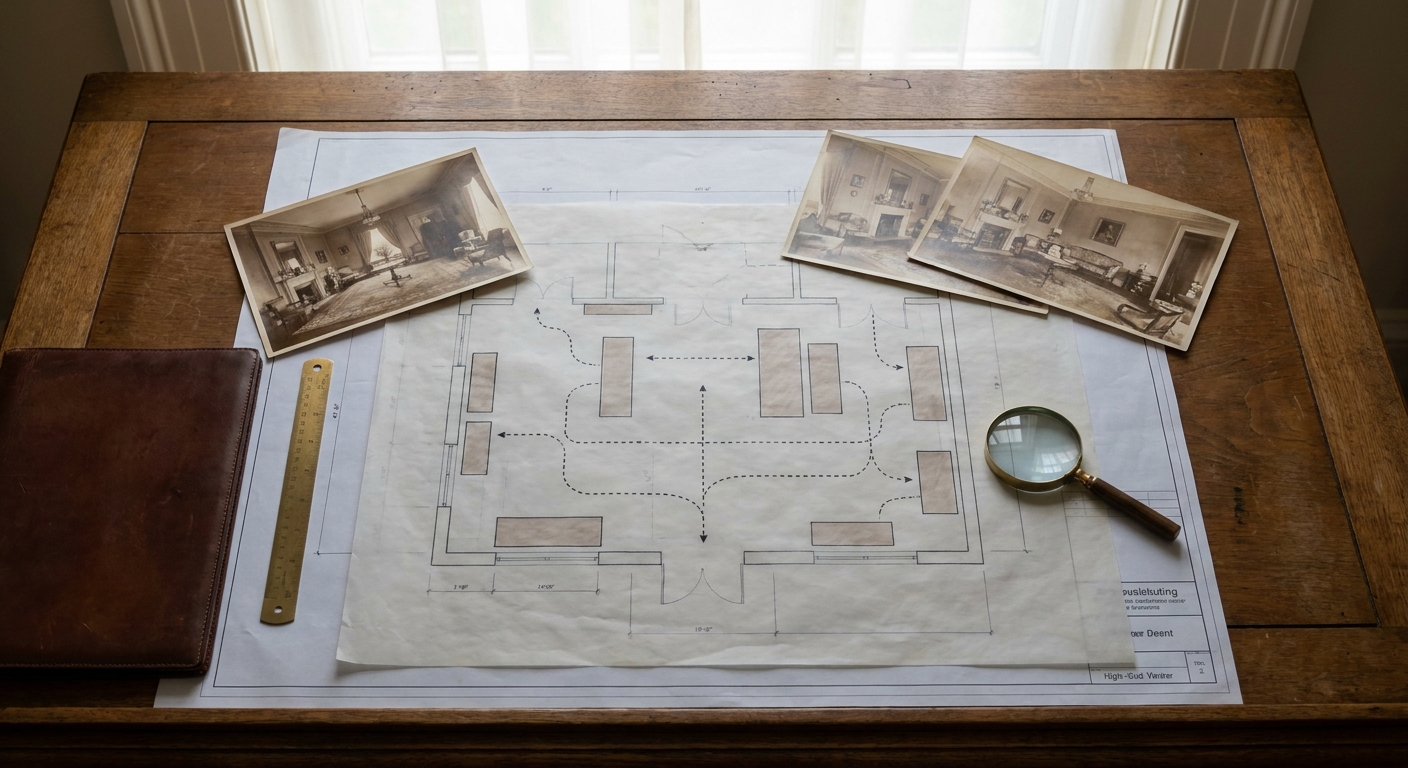
What role do historical images play in determining accurate room measurements?
Historical images play a critical role in determining accurate room measurements because preservationists apply photogrammetry techniques to calculate precise distances between known architectural reference points, such as 36-inch door frames or 12-inch baseboards, to extrapolate the exact dimensions of lost interior elements with mathematical certainty.
Analysts apply scaling algorithms to historical photographs to reconstruct missing architectural features. A standard 36-inch doorway visible in a 1910 photograph provides a reliable scale for calculating the height of adjacent wainscoting or the width of a destroyed fireplace mantel. Preservationists measure the pixel distances between known reference points to generate 3D models with error margins below 5 percent.
Why are National Park Service preservation briefs essential for material conservation?
National Park Service preservation briefs are essential for material conservation because the documents outline rigorous methodologies for stabilizing historic wood, plaster, and paint finishes in buildings under documented preservation conditions, ensuring that contractors apply chemically appropriate treatments to aging structural materials rather than relying on incompatible modern synthetic substitutes.
The National Park Service preservation briefs provide source-backed guidance for historic wood, plaster, and paint conservation in buildings under documented preservation conditions. Archival photographs often show the original condition of plasterwork before water damage or structural settling occurred. Contractors cross-reference historical images with preservation briefs to determine whether a 19th-century ceiling requires traditional lime plaster or modern stabilization compounds.
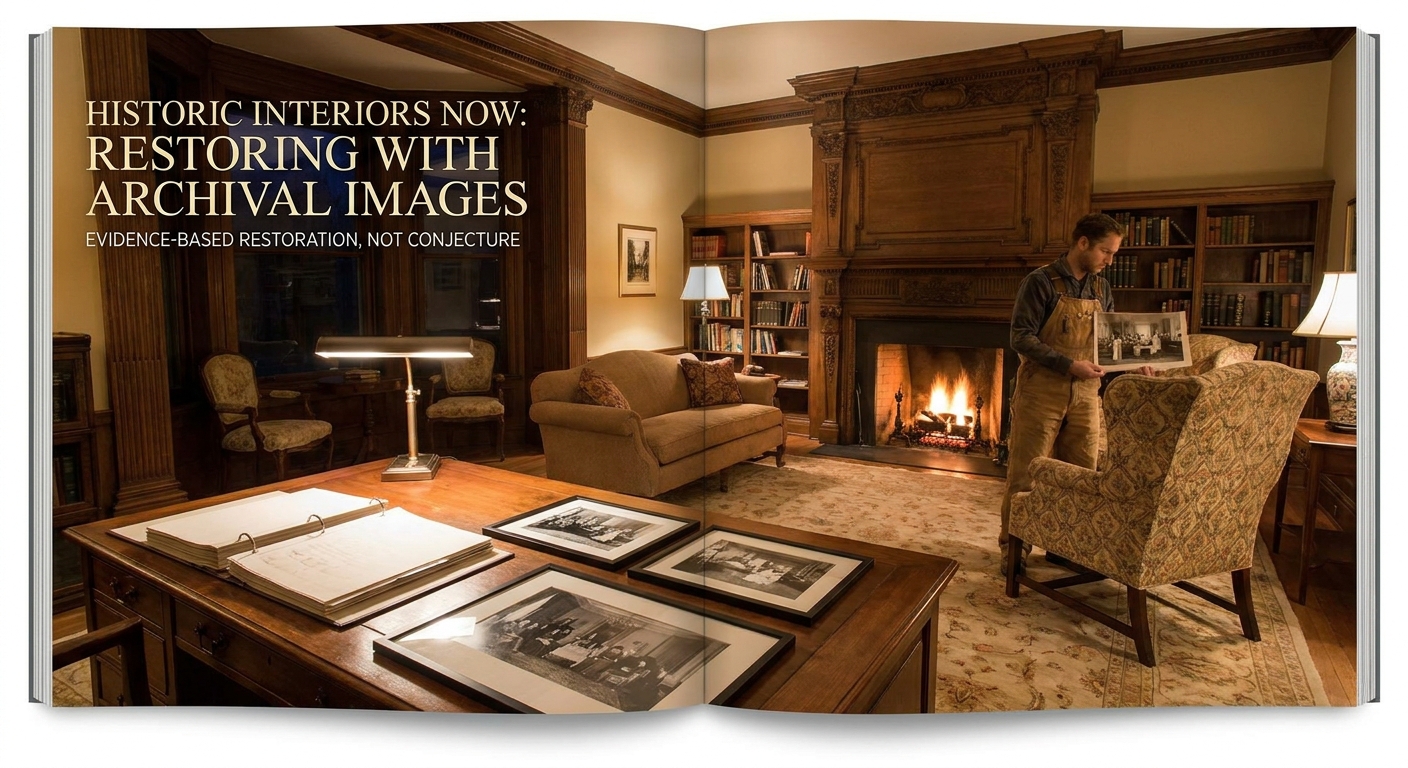
Cross-referencing visual data with physical material analysis
Visual documentation works alongside physical stratigraphy to confirm interior finishes. Paint conservators extract microscopic cross-sections from historic baseboards to identify the original pigment layers. Archival photographs indicate which specific architectural elements featured contrasting paint colors or gilded accents. Combining visual evidence with chemical analysis ensures that restoration teams replicate the exact 60 percent gloss level and specific hue present during the target historical period.
| Historical Period | Defining Characteristics | Typical Photographic Evidence |
|---|---|---|
| 18th-century Europe (Rococo) | Asymmetry, curves, shell-like ornament | Plasterwork details, carved wood paneling |
| 1920s and 1930s (Art Deco) | Geometric shapes, metallic finishes | Industrial design elements, symmetrical furniture layouts |
Related reading on this site
Readers comparing planning rules can also review Meet Our Team for adjacent context on the same site.
Material and proportion decisions connect closely with About Us, which gives readers another local reference point.